


Veterinary Care & Pricing at EastOver
Good medicine, good people, and honest conversations about what care costs.



Let’s talk about something that isn’t always easy to talk about at a veterinary hospital: money.
Veterinary care costs money, and sometimes quite a bit of it. We’d love to live in a world where every pet could get everything they needed without anyone having to think about their bank account, but that’s not the world most of us live in. We understand that, and we think it’s important to be upfront about what care costs.
We also don’t think you should have to call around town, leave a handful of voicemails, and ask twenty questions just to get an idea of what a veterinary visit might cost. So we’re putting our prices here, where you can find them.
Of course, veterinary medicine isn’t quite as simple as ordering off a menu. Two dogs can come in for what sounds like the same problem and need very different care. Some of our prices are straightforward, while others are ranges because the amount of care needed can vary. We’ll explain what we recommend, why we recommend it, and the estimated costs for the care planned today before moving forward.
We’re not trying to be the cheapest veterinary hospital in town. We’re trying to build the kind of hospital we’d want to bring our own animals to.
One where the medicine is excellent, the people are genuinely invested in what they do, and clients are treated as partners in their pets’ care. That means taking the time to listen, paying attention to the details, and making sure you understand what’s happening rather than expecting you to nod along and hope for the best.
And yes, it means being comfortable talking about money. Questions about your pet’s health and questions about what care costs are both important. We want you to feel comfortable asking either one. That’s how we want things to work at EastOver.
Good medicine isn’t one-size-fits-all
A Labrador who spends weekends swimming in ponds
anda Chihuahua who rarely ventures beyond the backyard
A young, healthy cat
anda fifteen-year-old cat who’s started drinking more water than usual
They may have very different health risks. It wouldn’t make much sense to recommend exactly the same care for all of them.
Our recommendations are grounded in medical standards of care, but they’re also based on the individual patient. We consider:
- Species
- Age
- Breed
- Medical history
- Lifestyle
- What you’re noticing at home
Our team works together to gather that information, evaluate your pet, and develop recommendations that make sense for their health.
We’ll explain what we recommend and why. Sometimes that means discussing preventive care that can help avoid problems down the road. Other times it means investigating something that isn’t quite right or talking through several possible ways to approach a medical concern.
We want you to understand the reasoning behind those recommendations, the options available when there are options, the risks to care and waiting on care, and what the care is expected to cost. Then we’ll work together on a treatment plan.
Veterinary Prices at EastOver
If you’re looking for a particular service, you can jump to the section you need.
- Exams & visits
- Dog & cat vaccines
- Diagnostics & testing
- Spay & neuter
- Dental care
- Other surgeries
- Specialty surgery
- End-of-life care
- Payment & financing
A few things to know about these prices
Some services have a set price, while others have an estimated range because the care involved can vary. These prices are intended to help you plan, but they don’t replace an individualized treatment plan.
Exams, vaccines, diagnostic tests, medications, and procedures are generally charged separately unless we’ve specifically indicated otherwise. When additional care is recommended, we’ll explain what it involves and review the estimated costs for the care planned today.
Prices last updated: November 2026
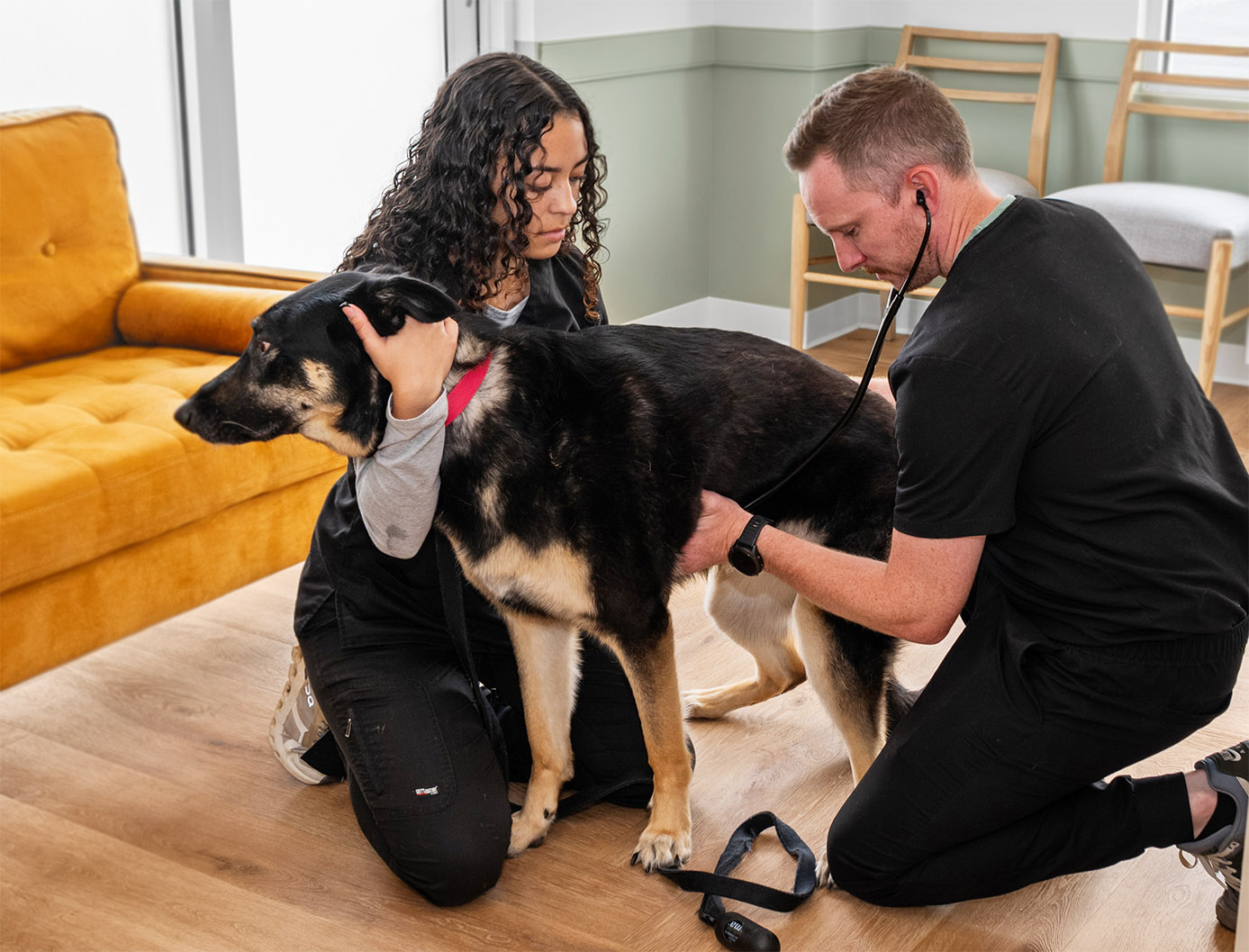
Veterinary Exams & Visits
We believe a good appointment starts with listening.
Sometimes what you noticed at home is the most useful piece of information we have, and we don’t want to miss it because everyone is rushing to get to the next thing.
During your visit, our team will gather your pet’s history, talk with you about your concerns, and work with the veterinarian to evaluate your pet. For a wellness visit, that may include conversations about vaccines, parasite prevention, nutrition, dental health, behaviour, and screening tests. For a sick visit, we’ll focus on figuring out what’s going on and what your pet needs next.
We make time to explain our findings and recommendations, and we want you to leave knowing what the plan is.
The exam fee covers the veterinarian’s examination and consultation, with support from our veterinary team throughout the visit. Vaccines, diagnostic testing, medications, and treatments are additional when recommended.
Dog & Cat Vaccine Prices
Not every pet needs every vaccine on this list, and we don’t expect you to figure out which ones are appropriate on your own.
Vaccines are an important part of preventive care, but the recommendations depend on your pet’s age, medical history, lifestyle, and exposure risks. A dog who boards regularly or spends a lot of time around other dogs may need different protection than one who mostly stays home. Cats have their own considerations, too.
We’ll review your pet’s history and talk through which vaccines are recommended, which may be optional based on their lifestyle, and why.
Dogs
Price- DHPP$42.70
- DHLPP$49.50
- Leptospirosis$42.50
- Lyme$58.50
- Bordetella$42.50
- Canine influenza (CIV)$58.00
- Rabies$38.25
Cats
Price- FVRCP$39.50
- Feline leukemia (FeLV)$57.00
- Rabies (Purevax)$42.50
These are individual vaccine prices. Your pet’s examination and any other recommended services are additional costs.
- Radiographs (X-rays)Including radiologist review$195–$350+
- Abdominal ultrasoundWith mobile board-certified internist$730.00
- BloodworkCommonly run panels$150–$300
- Canine heartworm & tick-borne disease panel$71.20
- Feline FeLV/FIV/heartworm test$79.00
- Microchip$61.50
Additional diagnostics or follow-up care may be recommended depending on your pet’s condition and the results. We’ll discuss those recommendations with you.
Diagnostics & Everyday Services
A physical exam can tell us a great deal, but there are plenty of things we can’t determine just by looking at a pet or listening to their heart.
Bloodwork can help us evaluate organ function and identify changes that aren’t obvious from the outside. X-rays and ultrasound help us investigate concerns inside the body. Sometimes these tests are part of preventive care, and sometimes they’re the next step in figuring out why a pet isn’t feeling well.
Our veterinarians, technicians, and assistants work together throughout the diagnostic process. That includes preparing patients, collecting samples, assisting with imaging, keeping pets as comfortable as possible, and communicating about the results and next steps.
We’ll explain what we’re looking for, why a particular test may be helpful, and what it may cost.
Comparing Veterinary Prices? Here’s What to Look For
A few things to know about surgery & dental pricing
Before we get into the numbers, there are a few things worth explaining.
Every pet having surgery or a dental procedure at EastOver needs a recent physical examination and up-to-date preoperative bloodwork. We want to make sure we understand their health and identify any concerns before anesthesia. These are separate charges and aren’t included in the procedure prices below.
You’ll notice that many of our prices are listed as ranges. That’s because your pet’s size, medical condition, and the care needed during a procedure can affect the final cost. We’ll review your pet’s treatment plan with you, explain what’s included, and discuss the estimated costs for the care planned today.
We also want you to understand what goes into those numbers. Veterinary hospitals don’t all structure their services or pricing the same way. One hospital may include certain services in a procedure price, while another may list them separately. That doesn’t necessarily make one approach better than the other, but it can make comparing prices a little confusing.
We think you deserve enough information to compare apples to apples, whether you’re looking at our prices or a treatment plan from another veterinary hospital.
Those are good questions, and we’re happy to help you understand the answers. Our goal is to make sure you understand what you’re getting and can make an informed decision about your pet’s care.
Spay & Neuter Surgery
Spaying and neutering are common procedures, but that doesn’t mean every patient is exactly the same. Your pet’s size, age, medical history, and anatomy can affect the surgery and the care needed before and afterward.
Surgery is also a good example of why we put so much emphasis on our team. The veterinarian performs the procedure, but there’s a lot happening before the first incision and after the last suture. Our licensed veterinary technicians and veterinary assistants have important roles in patient preparation, anesthesia support and monitoring within their training and responsibilities, nursing care, recovery, and helping you understand how to care for your pet at home.
Before surgery: A recent examination and up-to-date preoperative bloodwork are required. These are separate charges and aren’t included in the procedure prices above.
Dental Care for Dogs & Cats
There’s more to a dental procedure than cleaning teeth.
Dental disease can be surprisingly difficult to spot at home. A dog may continue eating normally despite painful teeth, and a cat can have significant dental problems without showing obvious signs that something is wrong.
That’s one reason we take dental health seriously. A proper dental evaluation involves looking beyond the visible surfaces of the teeth, including taking dental radiographs to see what’s happening below the gumline. As much as we wish every patient would stand still and say “ahhhhh,” our patients require general anesthesia for proper positioning and execution of dental care like X-rays and their cleanings.
Sometimes a pet needs a cleaning and little else. Other times we find damaged or diseased teeth that need treatment or extraction. We can’t always know the full extent of those problems until your pet is under anesthesia and we’ve completed the evaluation.
Throughout the procedure, our veterinary team works together to provide and monitor anesthesia care, perform the appropriate dental treatments within each person’s professional role, and support your pet through recovery.

Why is there such a wide price range?
Because a pet who needs a routine cleaning and a pet who needs several extractions aren’t receiving the same amount of care. We’ll explain what we know before the procedure, what we may discover during the dental evaluation, and how additional treatment could affect the total cost.
A recent examination and up-to-date preoperative bloodwork are required and are not included in the dental prices above.
Prefer to spread out the cost? We offer payment plans through Cherry and CareCredit. See financing options
Other Veterinary Surgeries
Finding out that your pet needs surgery can be a lot to take in.
You may be trying to understand the diagnosis, what the procedure involves, how recovery will work, and how much it’s going to cost, all in the same conversation.
We don’t expect you to absorb everything immediately. We want you to have the information you need, and we want you to feel comfortable asking questions.
Our veterinarians will explain the medical recommendations and surgical options. Our technicians and assistants are involved in preparing patients, providing care during the procedure, monitoring recovery, and helping you understand what to expect once your pet is home.
- Mass removal$700–$2,500+
- Vulvoplasty$1,200–$1,500+
- EnucleationEye removal, per eye$1,500–$2,000
- Pyometra surgeryUterine infection$1,500–$2,000+
- CystotomyBladder stone removal$1,700–$2,300
- Foreign body removal$2,000–$3,000+
- SplenectomyStable patient$2,000–$3,000+
Your pet’s condition, the complexity of the procedure, and any additional care needed can affect the final cost. We’ll review the treatment plan with you, including what’s included and what might be additional.
Before surgery: A recent examination and up-to-date preoperative bloodwork are required and are separate from these procedure prices.
Prefer to spread out the cost? We offer payment plans through Cherry and CareCredit. See financing options

Specialty Surgery at EastOver
Sometimes we bring the specialist to you.
Certain procedures require advanced surgical expertise. For some of those cases, we work with mobile board-certified surgeons who come to EastOver to perform surgery in our hospital.
The specialist brings their expertise, while our team helps coordinate the process and provides support before, during, and after the procedure. For some pets and families, that means being able to receive specialized care in a place they already know.
TPLO surgery (cruciate ligament repair)
- TPLO surgery$4,495–$4,875
- Typical totalIncluding required preoperative and 8-week postoperative radiographs$5,000–$6,000
Our visiting specialists may also perform:
- BOAS surgery for flat-faced breeds
- Fracture repairs
- Amputations
- Perineal urethrostomy (PU)
- Other advanced procedures
Please contact us to discuss your pet’s situation and whether specialty surgery at EastOver is an appropriate option.
Scheduling deposit: A $500 deposit is required for TPLO and other specialty surgeries. It is fully refundable when a cancellation is made at least 72 hours before the scheduled procedure.
Prefer to spread out the cost? We offer payment plans through Cherry and CareCredit. See financing options
End-of-Life Care
Some conversations deserve a little more time.
Deciding whether it’s time to say goodbye to a pet is one of the hardest parts of loving them. Sometimes the decision is clear, and sometimes you’re trying to make sense of changes that have happened slowly over weeks or months.
If you’re worried about your pet’s quality of life, we can talk through what you’re seeing at home, what we’re finding medically, and what options may be available. You don’t need to have everything figured out before you call.
When the time comes, our team will help you understand the process, answer your questions, and care for your pet as gently and respectfully as we can.
An examination is required for euthanasia unless your pet is an established patient. Cremation services are priced separately.
Questions We Wish More People Would Ask
We know conversations about money can be uncomfortable, especially when you’re worried about your pet. But we would much rather talk about your budget and your concerns than have you leave with unanswered questions or feel like you weren’t part of the decision.
Here are some questions we think every pet owner should feel comfortable asking:
- What’s included in my pet’s treatment plan, and what are the estimated costs for the care planned today?
- Are there other medically appropriate options?
- Which recommendations are most important today?
- Can any care safely be scheduled for later?
- What happens if we find something unexpected?
- Are there resources that might help me afford my pet’s care?
These conversations aren’t limited to the veterinarian. Our licensed veterinary technicians, veterinary assistants, and client care team are here to help you understand the plan, answer questions within their roles, and connect you with the right person when you need more information.
You don’t need to know the medical terminology, and you certainly don’t need to apologize for having a budget. We want you to understand what’s being recommended and feel comfortable being part of the conversation.
Let’s Talk About Money
Veterinary care is a financial commitment, and we know that families have different circumstances. Sometimes a recommendation is well within the budget, and sometimes it isn’t. Sometimes an unexpected illness or injury changes everything.
If you’re concerned about the cost of care, please tell us. We can talk through which recommendations are most important, whether there are other medically appropriate options, and whether some care can safely be scheduled for later. There won’t always be a less expensive option, and we won’t pretend otherwise, but we do want you to understand your choices.
Financing & pet insurance
EastOver accepts CareCredit and Cherry, so you can spread out the cost of surgeries, dental care, and other services over time.
Financing is subject to the provider’s eligibility requirements and terms. Our team can help explain the options available.
We also accept all major pet insurance providers to help you get reimbursed for eligible veterinary expenses.
View financingWhat if EastOver isn’t in my budget?
We know we’re not going to be the least expensive veterinary hospital in the area. We invest in our people, our equipment, and the time it takes to provide the kind of medical care and client experience we believe in. Those things have a cost, and we think it’s important to be honest about that.
We also know that sometimes our prices may be more than a family can manage. If that’s the case, we’d still like to help you find a place to start. Depending on what your pet needs, there may be lower-cost clinics, community vaccine or spay/neuter programs, or organizations that provide financial assistance for veterinary care.
We can’t promise that another hospital will have availability or that a financial assistance program will approve funding. But we can help point you toward resources worth exploring.
Our goal is to help pets get the care they need, even when that care happens somewhere else.
When Your Pet Needs Care Right Away
If your pet is sick or injured and needs attention soon, please call us. Our team can help determine whether an appointment at EastOver is appropriate or whether an emergency hospital would be better equipped to provide the care your pet needs.